[Case 01]

Little Pathfinder

Education Technology
Adoption made simple and accessible

[Project Overview]

Little Pathfinder is a research-informed concept designed to support young children when they feel lost in public spaces. Through playful, hands-on interactions (storytelling, visuals, and guided practice), it helps children remember key personal information, learn “stay put” and help-seeking strategies, and recognize safe adults (e.g., employees, security). The experience prioritizes emotional comfort and privacy-by-design, encouraging parent–child collaboration.

[Project Goals]


  1. Keep kids engaged through playful interaction. Design an interactive, engaging experience that captures and maintains a child’s attention.


  1. Support safety and confidence in help-seeking. Provide comfort and emotional reassurance while teaching children how to identify and approach safe adults for help.


  1. Build essential memory skills while protecting privacy. Help children remember key personal information (e.g., parent contact details) in a way that safeguards the family’s private data.


[Industry]

Education

[My Role]

UX Designer/ Researcher

[Methods]

In Depth Interview

User Survey

User Flow

Prototypes

[Timeline]

September 2025- December 2025

[Process]

[01] Fly on the Wall

Observed discussed theme regarding children's safety on online forums.

Noted behaviors, conversations, and pain points.

Grouped observations into themes to inform design decisions.

[01] Fly on the Wall

Observed discussed theme regarding children's safety on online forums.

Noted behaviors, conversations, and pain points.

Grouped observations into themes to inform design decisions.

[01] Fly on the Wall

Observed discussed theme regarding children's safety on online forums.

Noted behaviors, conversations, and pain points.

Grouped observations into themes to inform design decisions.

[02] In Depth Interview

Conducted interviews with 2 teachers of 5-year-olds

Conducted interview with a mom of three.

Summarized findings into key takeaways.

[02] In Depth Interview

Conducted interviews with 2 teachers of 5-year-olds

Conducted interview with a mom of three.

Summarized findings into key takeaways.

[02] In Depth Interview

Conducted interviews with 2 teachers of 5-year-olds

Conducted interview with a mom of three.

Summarized findings into key takeaways.

[03] User Survey

Design survey to learn about potential user concerns and pain points.

We surveyed 20 parents and caregivers to understand how children learn and recall safety information.

Grouped top insights into themes to guide design decisions.

[03] User Survey

Design survey to learn about potential user concerns and pain points.

We surveyed 20 parents and caregivers to understand how children learn and recall safety information.

Grouped top insights into themes to guide design decisions.

[03] User Survey

Design survey to learn about potential user concerns and pain points.

We surveyed 20 parents and caregivers to understand how children learn and recall safety information.

Grouped top insights into themes to guide design decisions.

[04] User Flow

Conducted interviews with 5 possible users to uncover frustrations and preferences.

Analyzed behavioral data to identify bottlenecks in the current flow.

Benchmarked against competitors to identify best practices for checkout flows.

[04] User Flow

Conducted interviews with 5 possible users to uncover frustrations and preferences.

Analyzed behavioral data to identify bottlenecks in the current flow.

Benchmarked against competitors to identify best practices for checkout flows.

[04] User Flow

Conducted interviews with 5 possible users to uncover frustrations and preferences.

Analyzed behavioral data to identify bottlenecks in the current flow.

Benchmarked against competitors to identify best practices for checkout flows.

[Fly on the Wall]

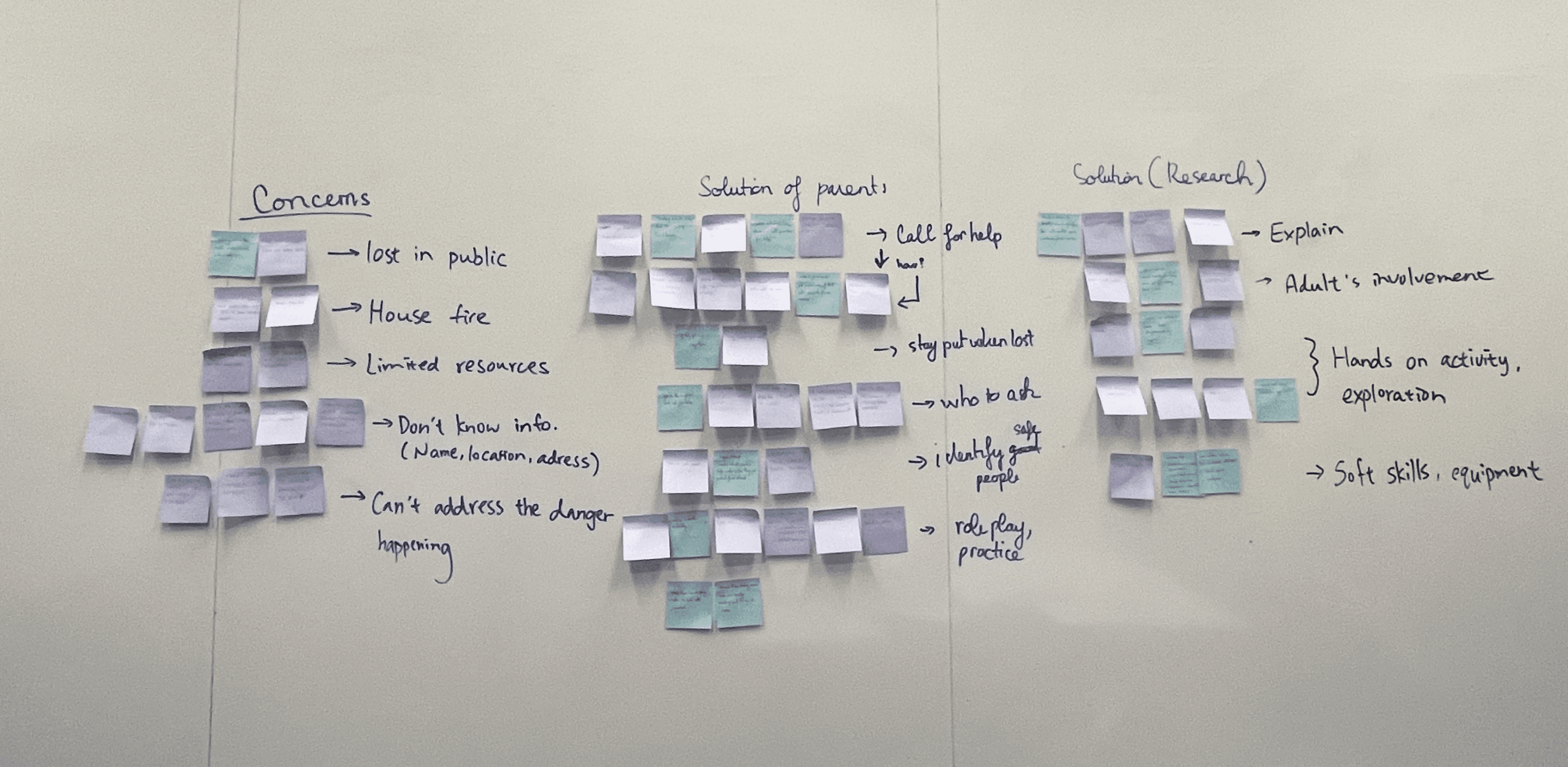
Getting Lost Is Parents’ Biggest Safety Fear

Parents’ most frequent concern is their child getting lost in public places, yet they feel they have limited access to clear, trustworthy resources on what to do in these situations.

Kids Often Don’t Know Key Safety Information

Many parents worry that their children don’t reliably know or remember essential details like home address and phone number, and are very interested in helping them learn how to call for help.

Recognizing Danger and “Safe People” Is Hard

Parents are anxious about whether children can recognize unsafe situations or people, and whether they can identify “safe adults” (e.g., staff, security) to approach when they need help.

Parents Value Concrete Strategies and Role Play

Strategies like “stay put” are commonly mentioned, and parents highly value role-playing and practice-based activities as ways to help children rehearse what to do if they get lost.
Interviewees:

  1. Teachers (2 interviews): Taiwanese and Brazilian teachers of 5-year-olds shared how children learn over time, effective activities, and assessment methods, helping us understand developmental patterns and how kids ages 5–8 absorb safety concepts.

  2. Parents (1 interview): A Seattle-based parent described safety concerns, everyday navigation, and technology use at home, giving us insight into how children encounter and practice safety in daily life.


[In-Depth Interview]

[In-Depth Interview]

Children’s attention span is ~20 minute

Children’s attention span is ~20 minute

Hands-on, visual, playful activities (scavenger hunts, map exploration, collages, songs) are most engaging for children

Parents worry that devices may hinder spatial learning, but support interactive, educational tools when used appropriately

Parents worry that devices may hinder spatial learning, but support interactive, educational tools when used appropriately

Parental involvement strengthens learning outcomes and fosters quality family time

Recommended tools should focus on interactive, visual, playful experiences that promote parent–child collaboration and safe, independent navigation skills

Parental involvement strengthens learning outcomes and fosters quality family time

Hands-on, visual, playful activities (scavenger hunts, map exploration, collages, songs) are most engaging for children

Interviewees:

  1. Teachers (2 interviews): Taiwanese and Brazilian teachers of 5-year-olds shared how children learn over time, effective activities, and assessment methods, helping us understand developmental patterns and how kids ages 5–8 absorb safety concepts.

  2. Parents (1 interview): A Seattle-based parent described safety concerns, everyday navigation, and technology use at home, giving us insight into how children encounter and practice safety in daily life.


Recommended tools should focus on interactive, visual, playful experiences that promote parent–child collaboration and safe, independent navigation skills

[In-Depth Interview]

[Fly on the Wall]

13 out of 20

Are unsure their child would remember info when scared

12 out of 20

Report short attention span as the main teaching barrier

14 out of 20

Want more engaging teaching tools

10 out of 20

Are not confident their child knows who to approach for help

[Survey Findings]

[Survey Findings]

We surveyed 20 parents and caregivers to understand how children learn and recall safety information


13 out of 20

Are unsure their child would remember info when scared

[Survey Findings]

[User Survey]

13 out of 20

Are unsure their child would remember info when scared

12 out of 20

Report short attention span as the main teaching barrier

14 out of 20

Want more engaging teaching tools

13 out of 20

Are unsure their child would remember info when scared

10 out of 20

Are not confident their child knows who to approach for help

We surveyed 20 parents and caregivers to understand how children learn and recall safety information


[Survey Findings]

[Persona]

Emily

Mom of Two

Age: 32

Location: Seattle

Tech Proficiency: Moderate

Gender: Female

[Goal]

Feel reassuring with her kid's safety.

Teaching tools that can easily fit into her daily routine.

Want her kids to learn key informations by heart so they can use it when they're lost.

[Frustrations]

Children's lack of interest and attention span.

Lack of time and energy.

Not knowing what teaching methods and tools are effective.

Dora

Kindergarten student

Age: 6

Location: Seattle

Tech Proficiency: Beginner

Gender: Female

[Goal]

Feel reassuring with her kid's safety.

Teaching tools that can easily fit into her daily routine.

Want her kids to learn key informations by heart so they can use it when they're lost.

[Frustrations]

Children's lack of interest and attention span.

Lack of time and energy.

Not knowing what teaching methods and tools are effective.

[Ideation Sketch]

[Ideation Sketch]

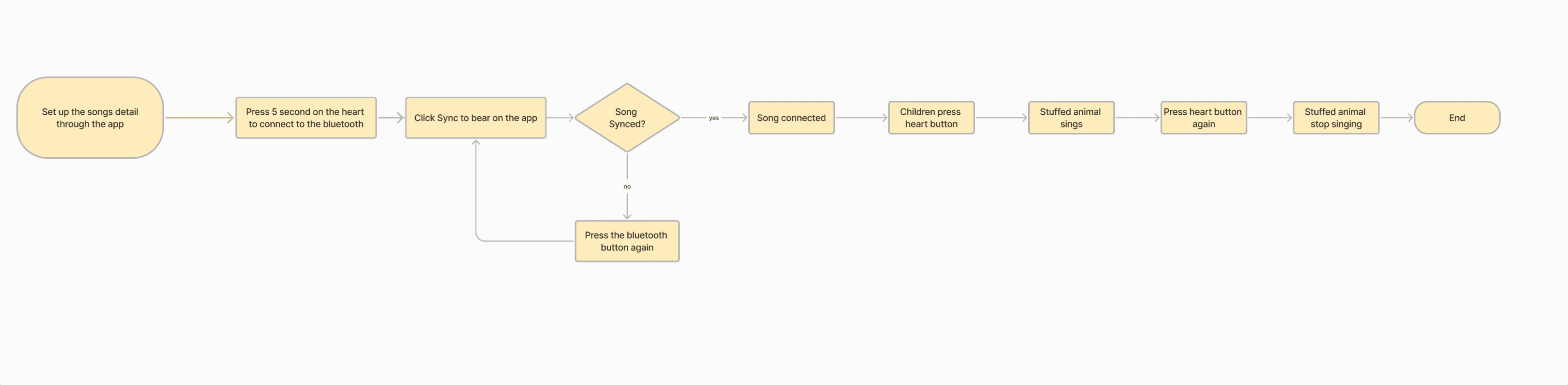
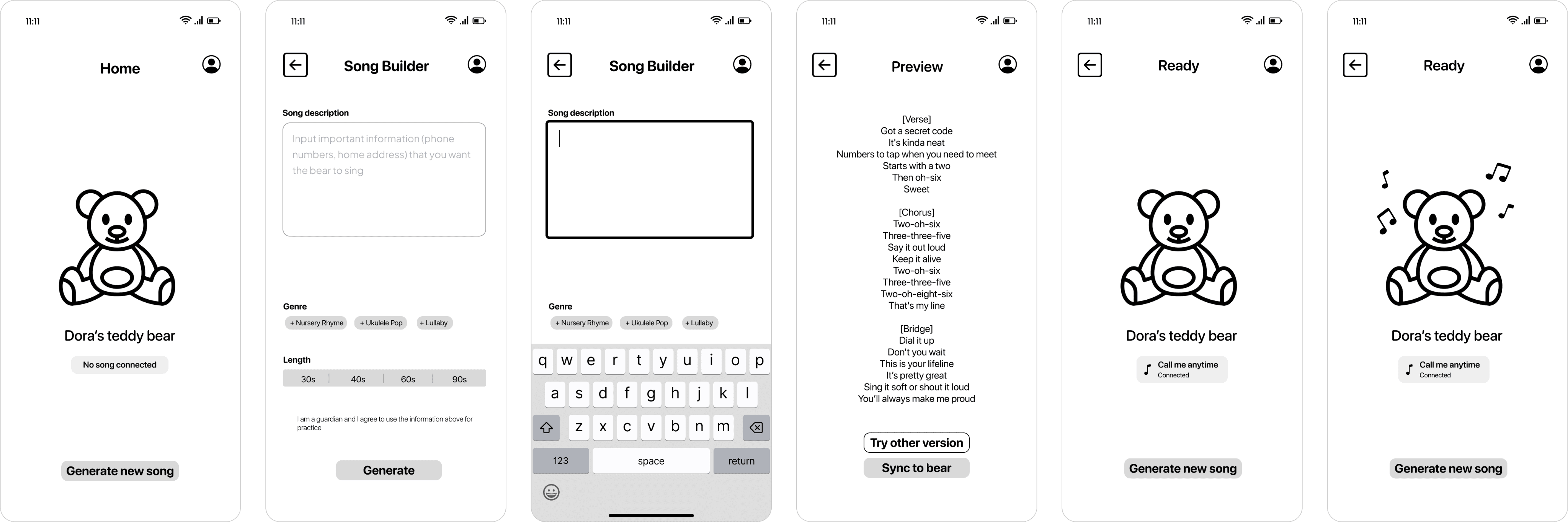
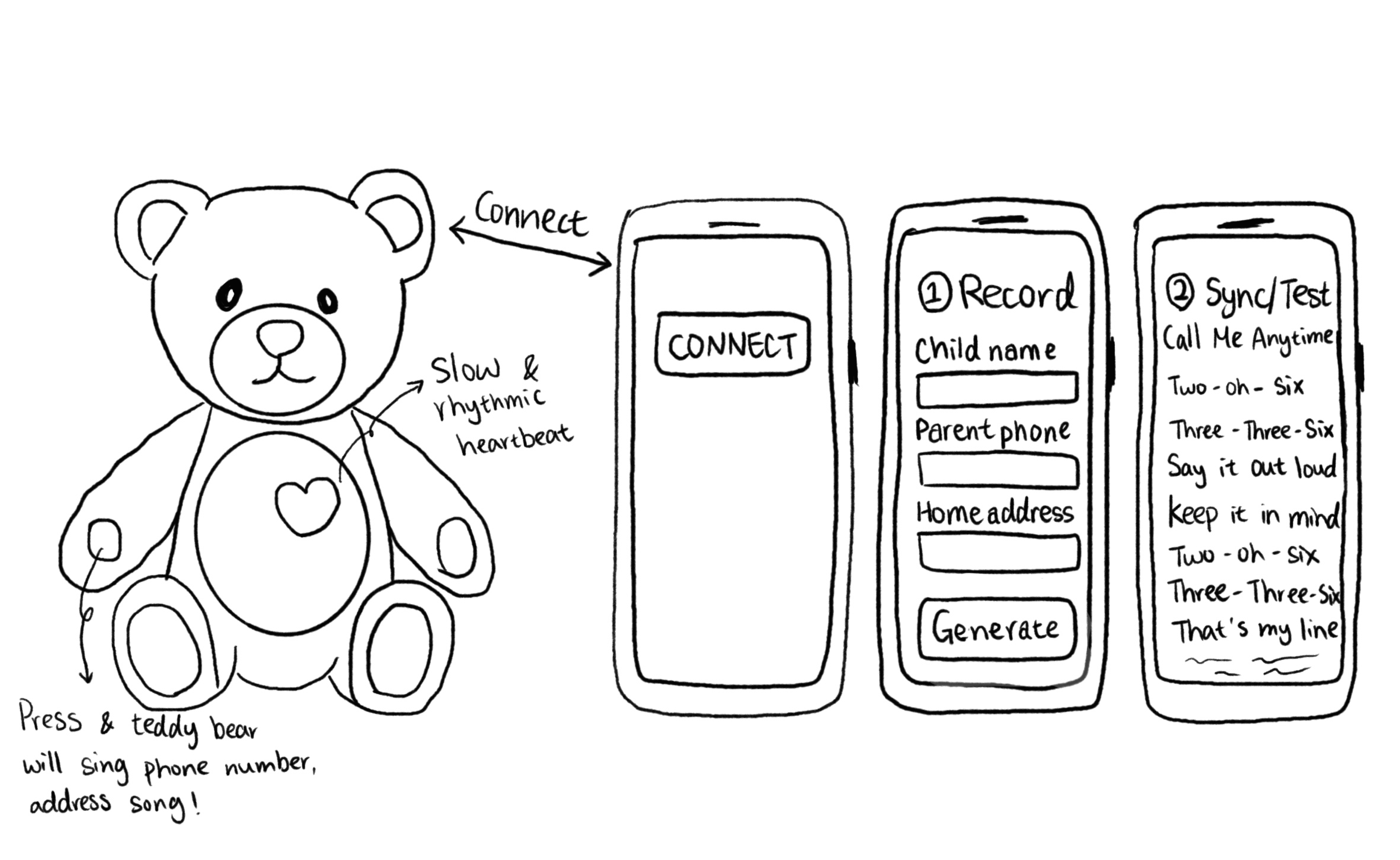
A calming teddy bear that pairs with a parent app to turn contact details into a simple, personalized safety song. The bear’s rhythmic heartbeat and playful singing help children self-soothe and remember what to do if they get lost.
App

Website

Teddy Bear

Storybook

Storybook

[User Flow]

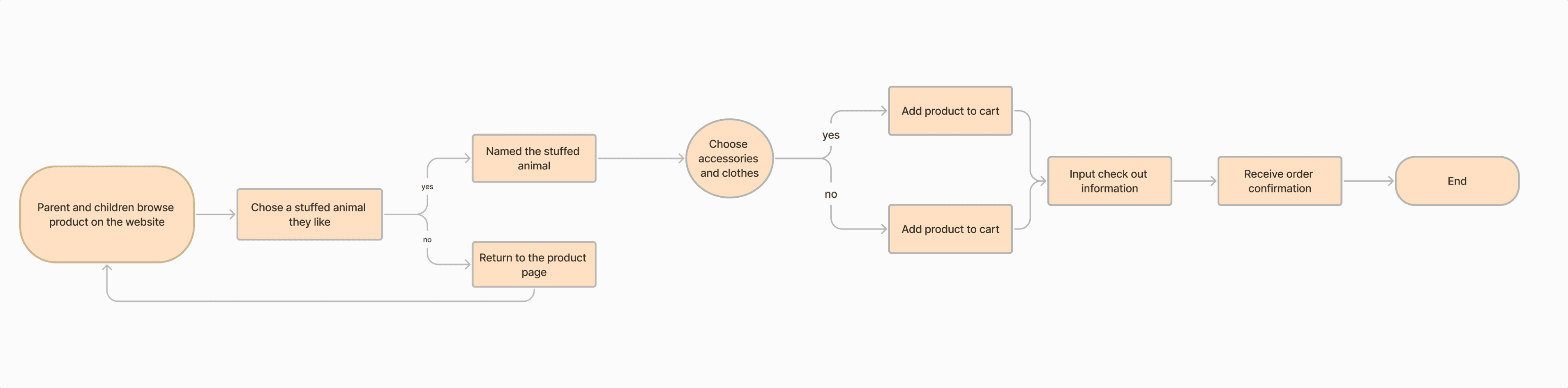
App

Storybook

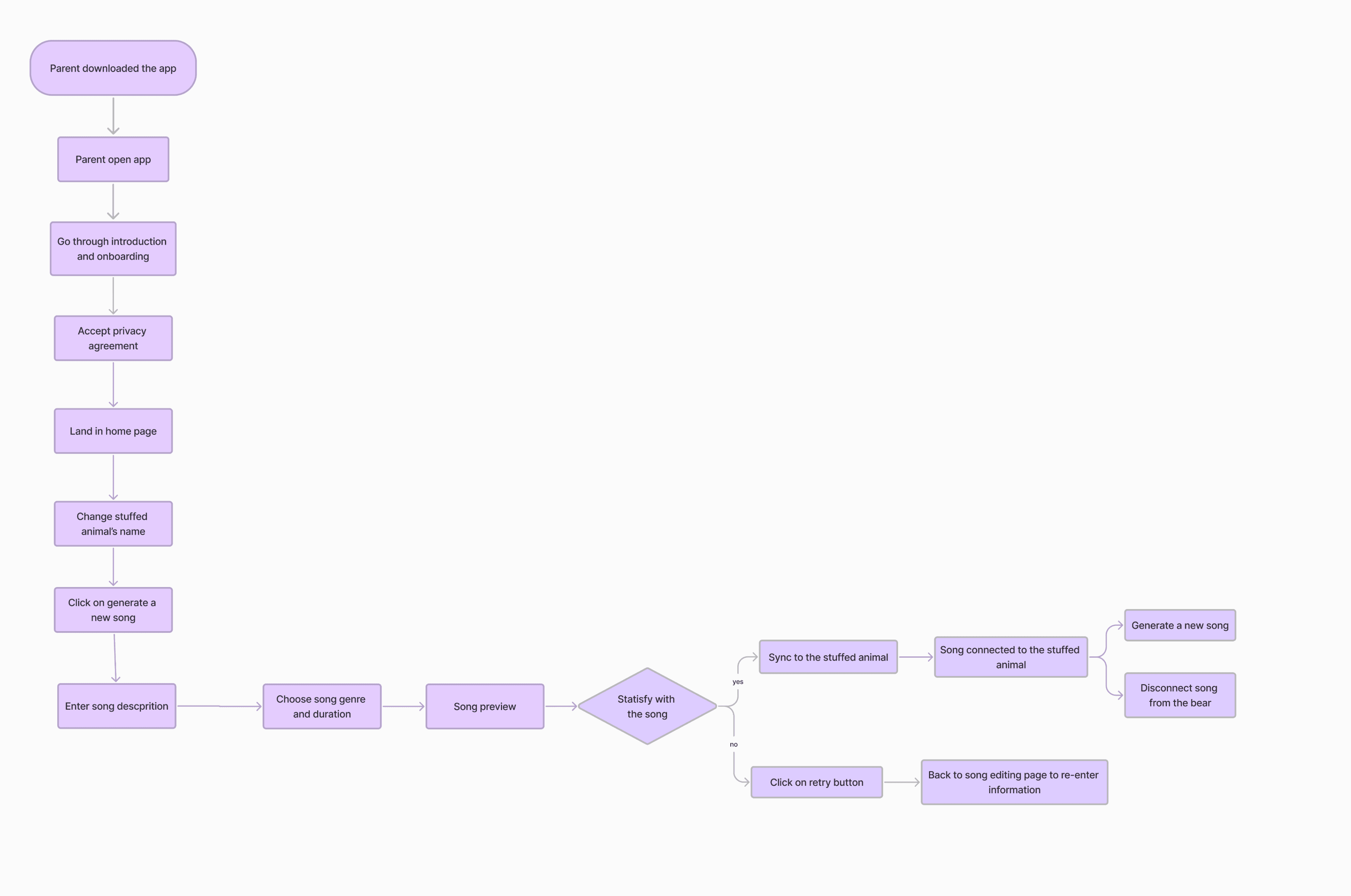
[User Flow]

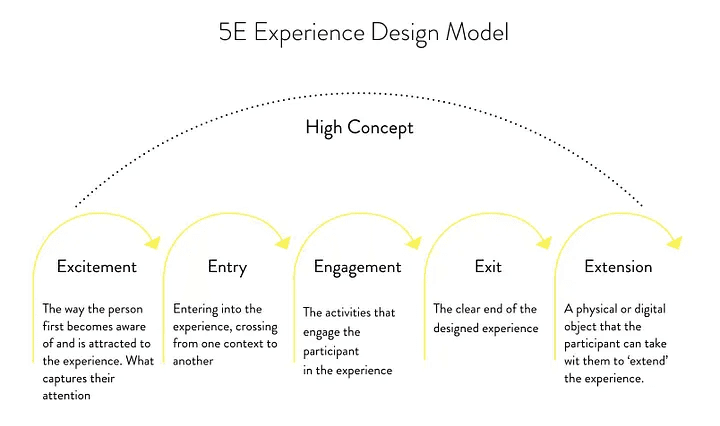
A holistic approach was used to design the entire journey for parents and children, creating a delightful experience that keeps little ones engaged from start to finish. The solution is based on the 5E Experience Design model.

A holistic approach was used to design the entire journey for parents and children, creating a delightful experience that keeps little ones engaged from start to finish. The solution is based on the 5E Experience Design model.

Excitement: Purchasing website enables personalizing the singing teddy bear

Entry: An instruction card with a QR code to access the app. It also provides a clear, all-in-one kit with simple instructions, removing friction for parents.

Engagement: Music generation app & Stuffed animal

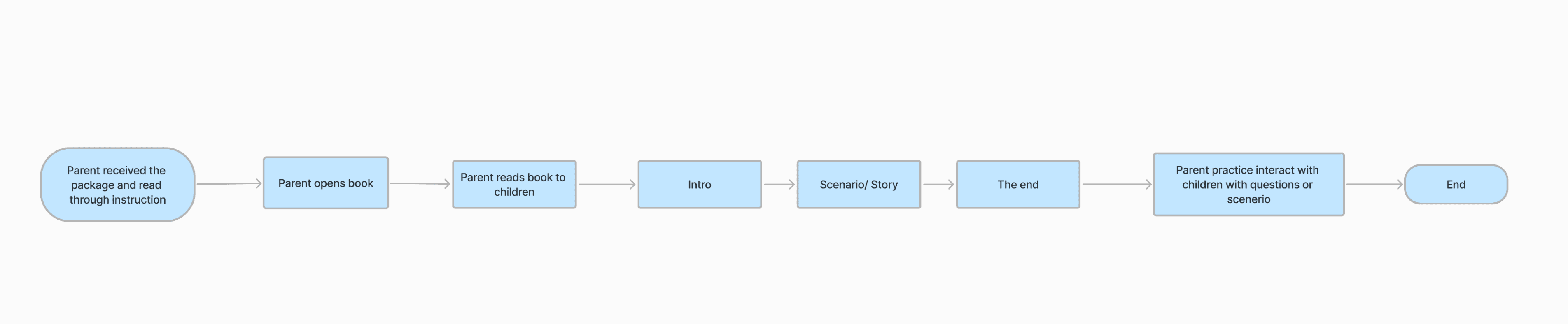
Exit: Pair the experience with the storybook for gentle repetition and reinforcement.

Extension: Updating new songs, toys, and storybooks as children grow


[Design Solution]

[Design Solution]

[Wireframe]

[Final Design]

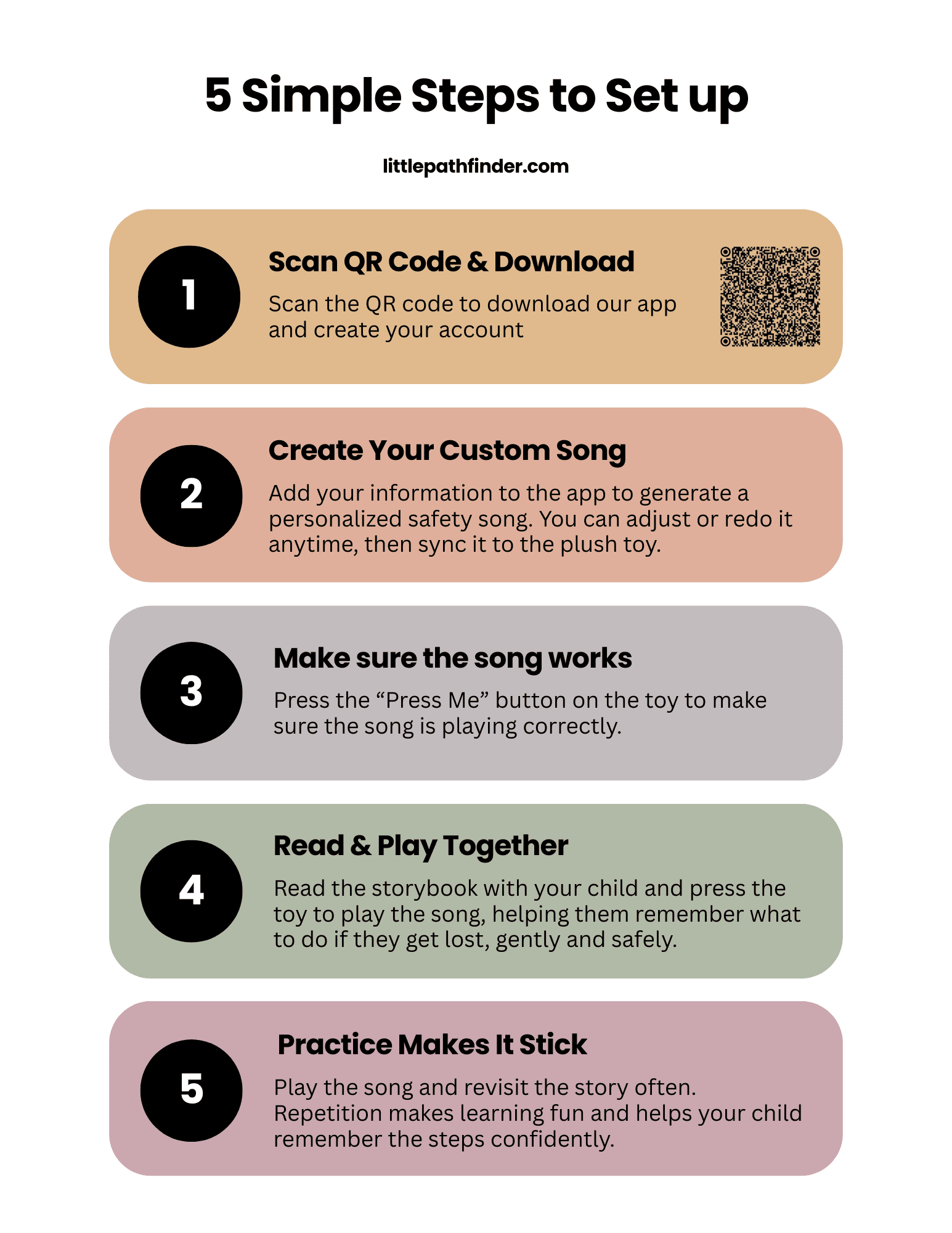
A simple card included in the package that guides parents through setup and how to use the product effectively.

Instruction card

Instruction card

Website for teddy bear personalization

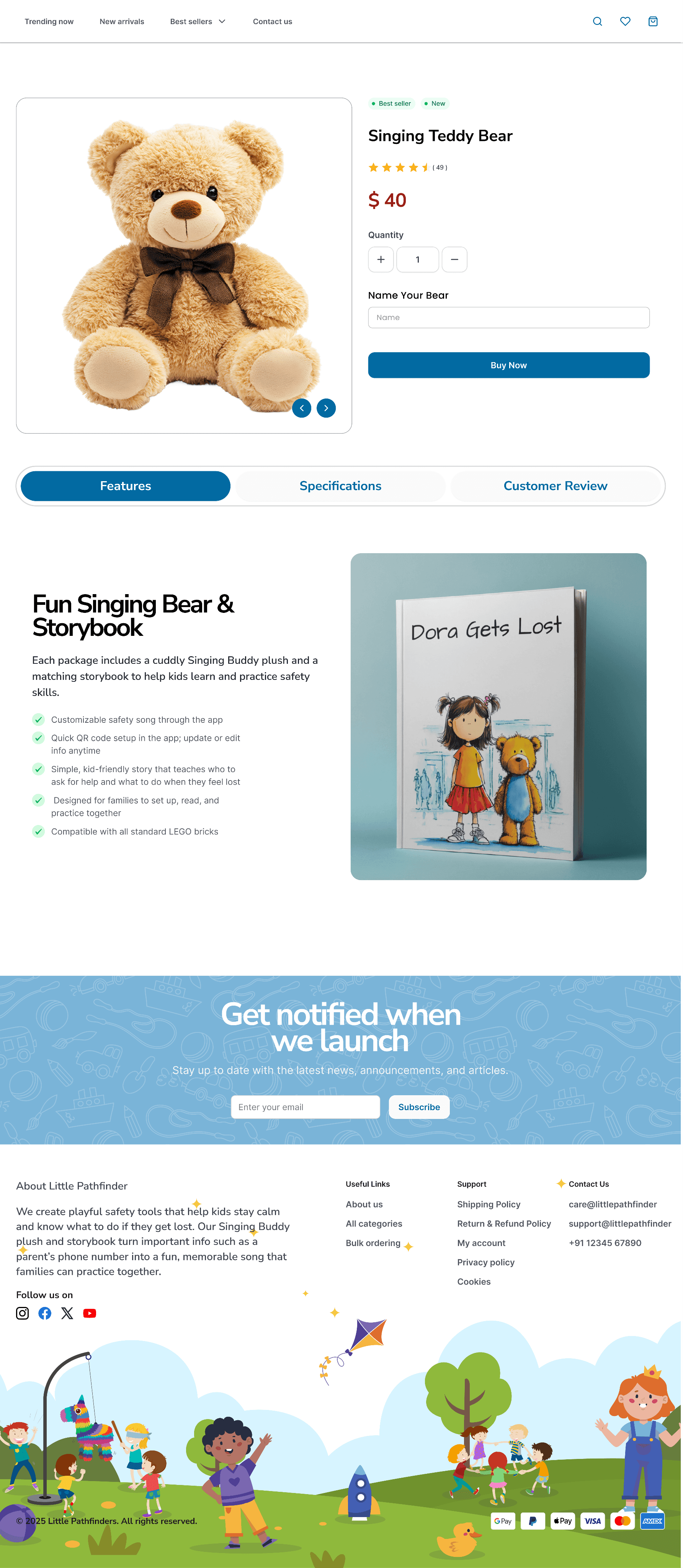
A website where parents can learn about the product, customize their stuffed animal, and complete their purchase.

A website where parents can learn about the product, customize their stuffed animal, and complete their purchase.

A website where parents can learn about the product, customize their stuffed animal, and complete their purchase.

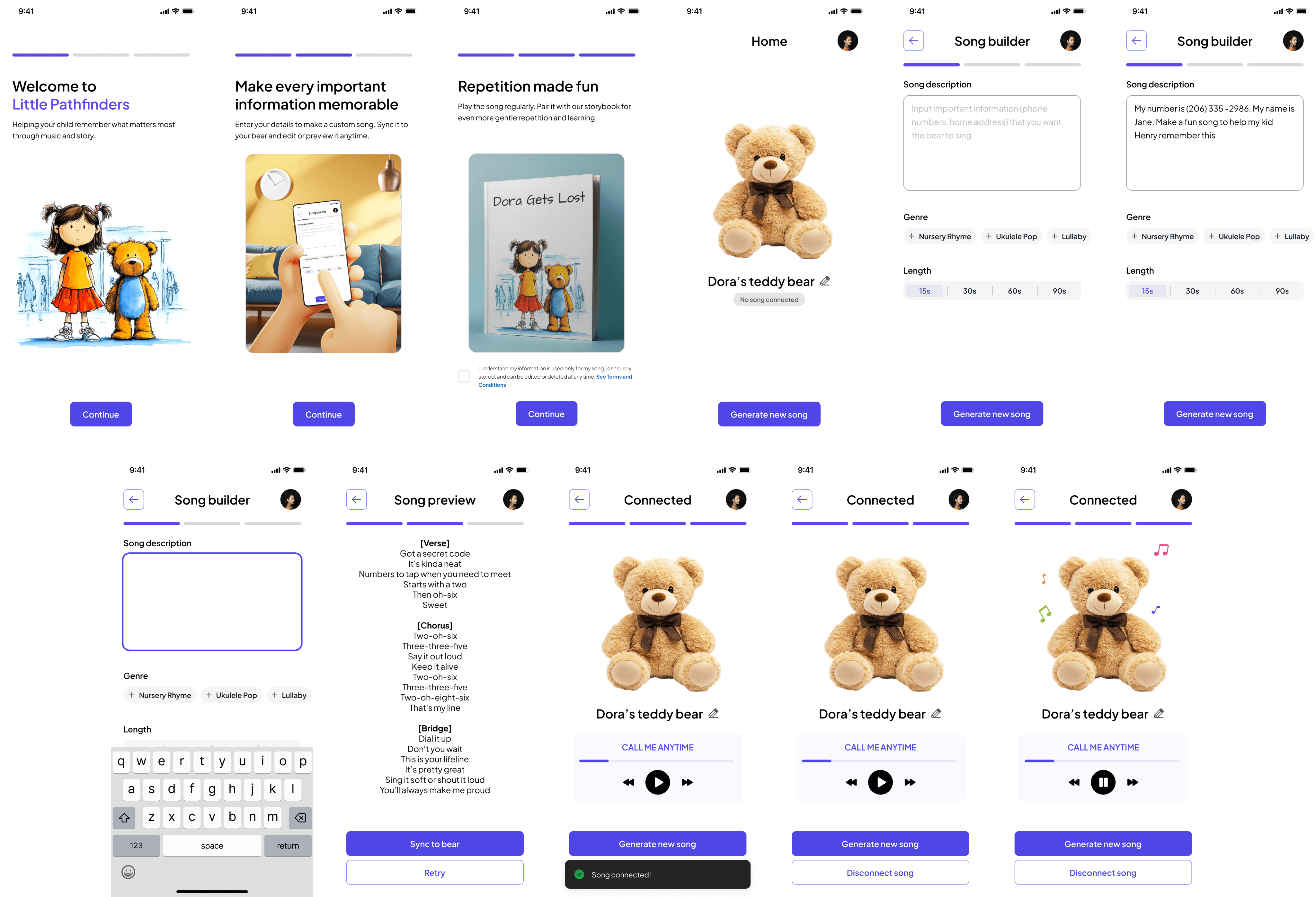
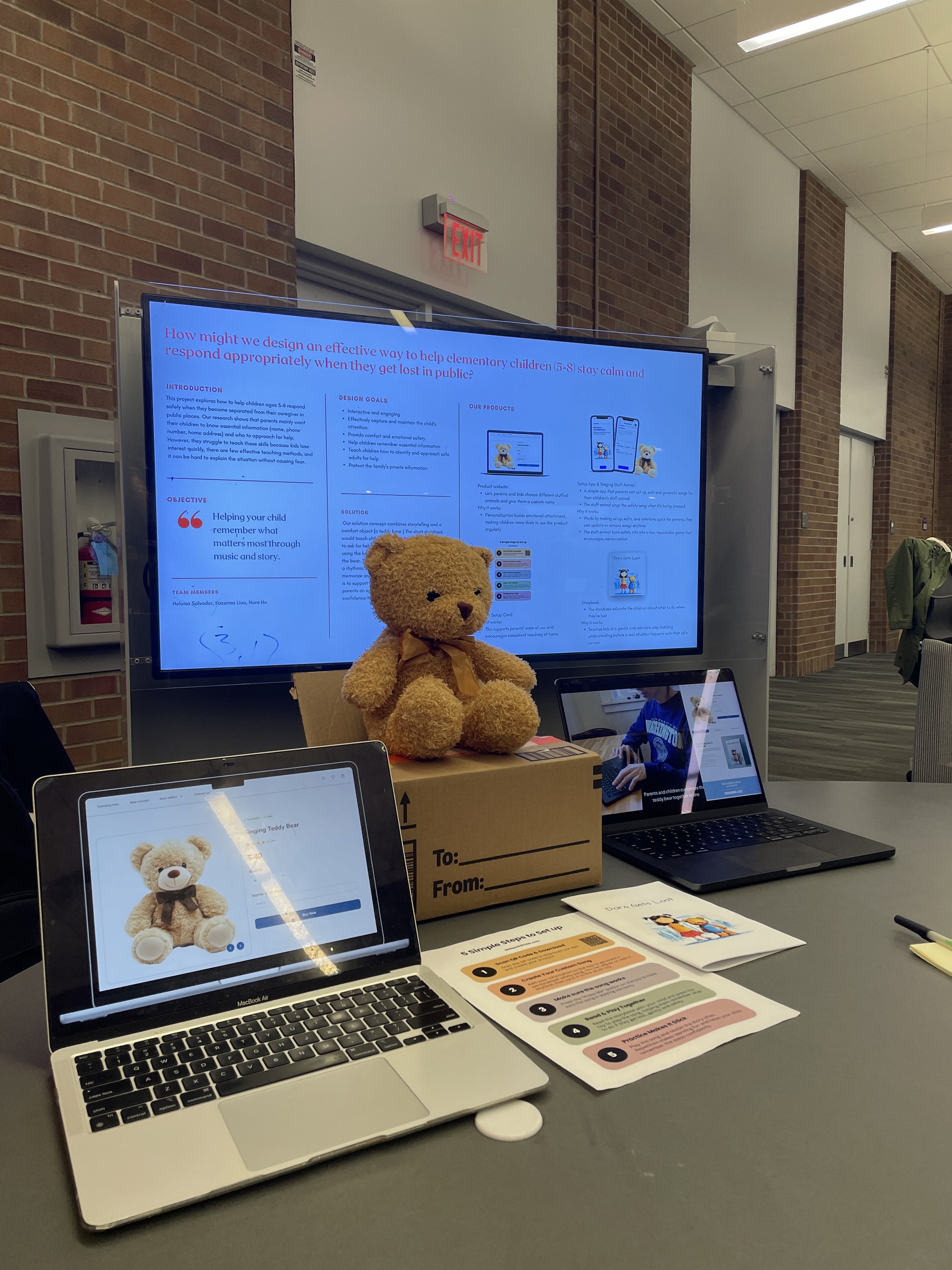
We put together a welcome box for parents that includes an instruction card, a teddy bear, and a storybook. We then tested the prototype with three parents to improve the app and understand how easily they could integrate the box into their daily routine.

We put together a welcome box for parents that includes an instruction card, a teddy bear, and a storybook. We then tested the prototype with three parents to improve the app and understand how easily they could integrate the box into their daily routine.

Prototype link here

Music generation app

Music generation app

Speaker

Speaker

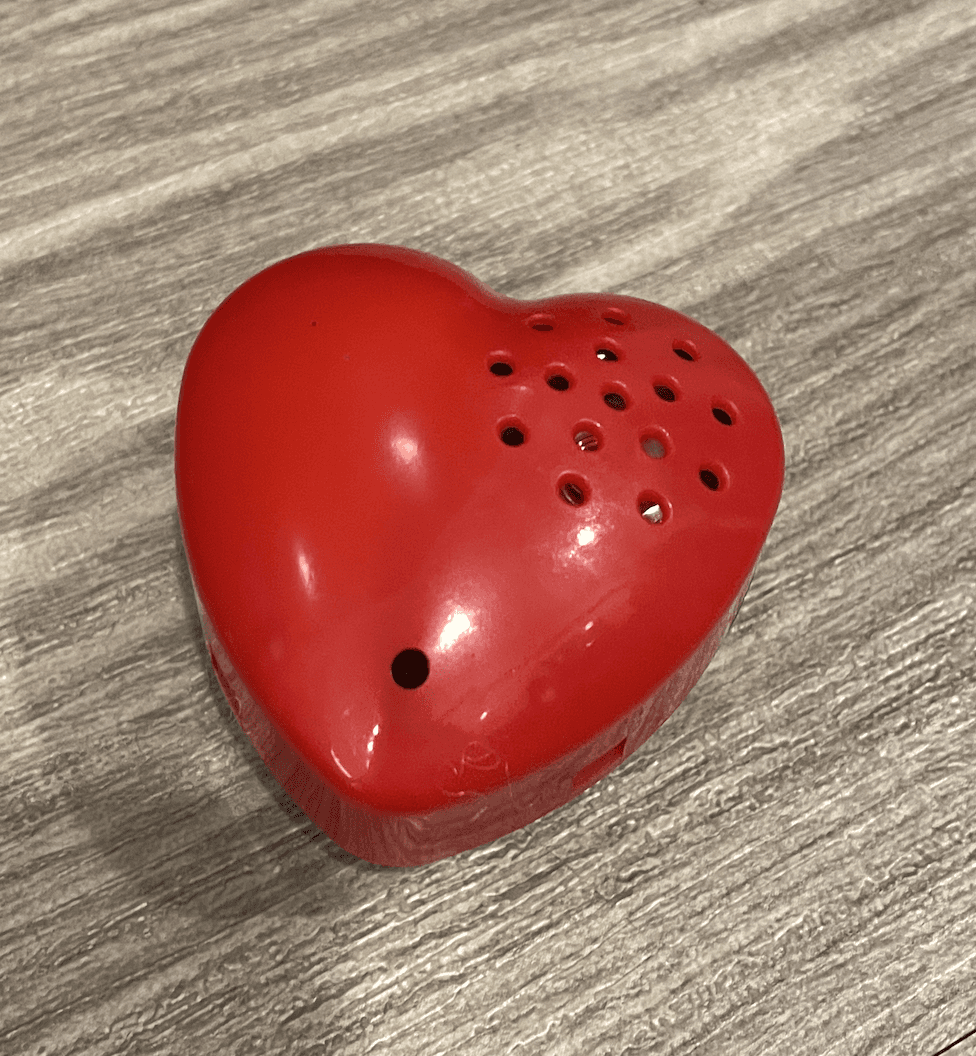
The player device is connected to our music generation app via bluetooth. The heart is put at the back of the teddy bear’s body. When users press the bear, the heart is pressed and plays the music.

Bluetooth connect button

The heart is divided into 2 parts, when user press the whole heart, the song would be played through the speaker

Teddy bear and the music player

A stuffed animal with a belly press mechanism and Bluetooth speaker that plays the personalized safety song.

Prototype & Final design specification

A simple card included in the package that guides parents through setup and how to use the product effectively.

Instruction card

Instruction card

A stuffed animal with a belly press mechanism and Bluetooth speaker that plays the personalized safety song.

The heart is divided into 2 parts, when user press the whole heart, the song would be played through the speaker

The player device is connected to our music generation app via bluetooth. The heart is put at the back of the teddy bear’s body. When users press the bear, the heart is pressed and plays the music.

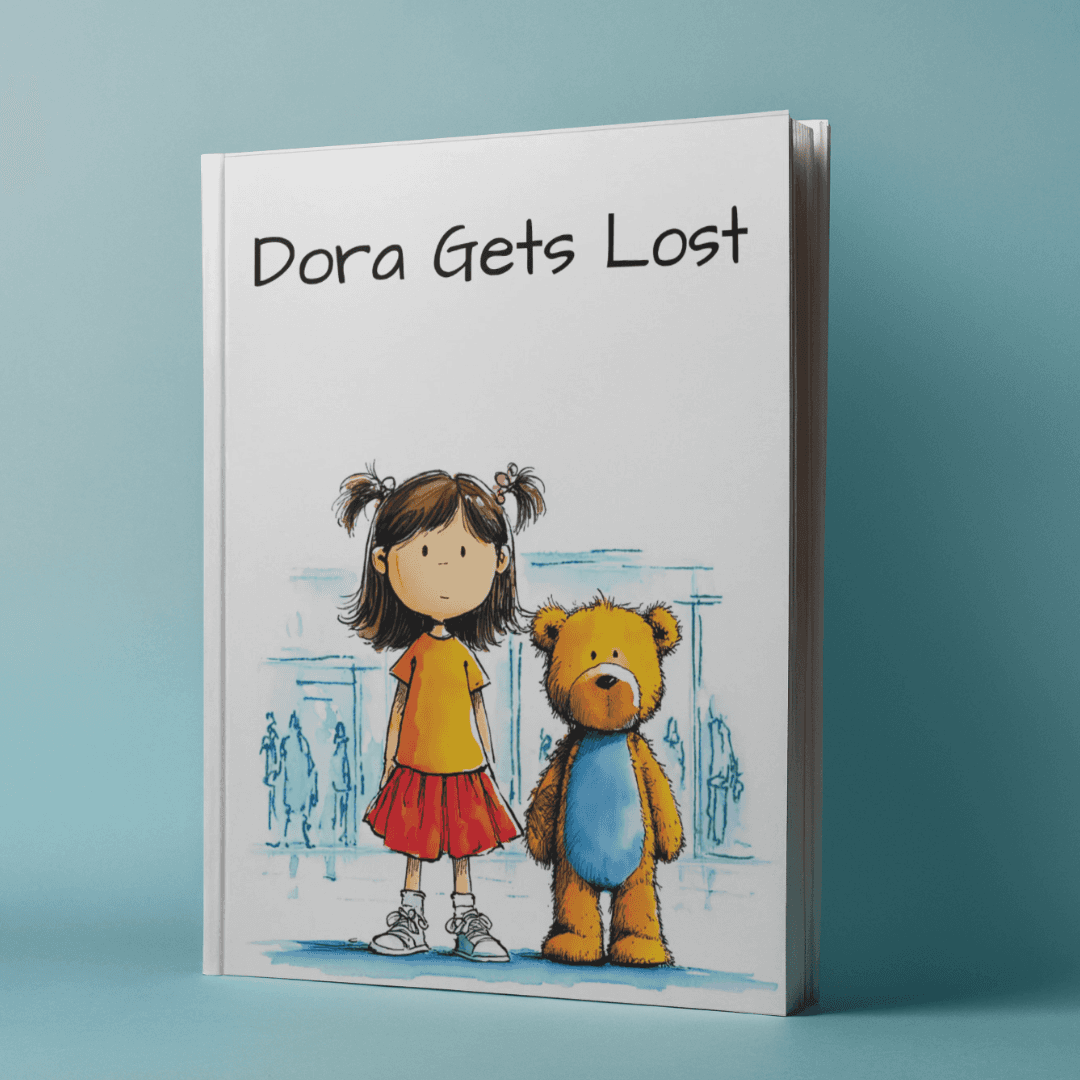
A short story that teaches children what to do when they get lost, in a gentle and reassuring tone.

[Wireframe]

Storybook

A short story that teaches children what to do when they get lost, in a gentle and reassuring tone.

[Key Learnings]

Privacy-by-Design Builds Trust

Designing for safety also means designing for privacy, using minimal necessary info while enabling quick, appropriate help

Privacy-by-Design Builds Trust

Designing for safety also means designing for privacy, using minimal necessary info while enabling quick, appropriate help

Privacy-by-Design Builds Trust

Designing for safety also means designing for privacy, using minimal necessary info while enabling quick, appropriate help

Playful Practice Improves Recall

Short, repeatable activities (role-play, visuals, songs) help children remember key info and confidently ask a safe adult for help.

Playful Practice Improves Recall

Short, repeatable activities (role-play, visuals, songs) help children remember key info and confidently ask a safe adult for help.

Playful Practice Improves Recall

Short, repeatable activities (role-play, visuals, songs) help children remember key info and confidently ask a safe adult for help.

Non-bias survey design improves data quality

Keeping survey questions neutral (no leading wording) and offering balanced answer choices reduced pressure to “say the right thing,” resulting in more trustworthy insights about parents’ real concerns and behaviors.

Non-bias survey design improves data quality

Keeping survey questions neutral (no leading wording) and offering balanced answer choices reduced pressure to “say the right thing,” resulting in more trustworthy insights about parents’ real concerns and behaviors.

Non-bias survey design improves data quality

Keeping survey questions neutral (no leading wording) and offering balanced answer choices reduced pressure to “say the right thing,” resulting in more trustworthy insights about parents’ real concerns and behaviors.

Select this text to see the highlight effect